
How to correctly select thermal overload protection for a star-delta starter?

30.03.2026

The Star-Delta (Y-D) start-up is one of the most popular methods for limiting the inrush current of induction motors. However, what seems simple in theory often causes practical challenges when selecting the right protective equipment. A calculation error can lead to either “nuisance” tripping or, even worse, a burnt-out motor winding.
HOW TO CORRECTLY SELECT THERMAL OVERLOAD PROTECTION FOR A STAR-DELTA STARTER?

The Star-Delta (Y-D) start-up is one of the most popular methods for limiting the inrush current of induction motors. However, what seems simple in theory often causes practical challenges when selecting the right protective equipment. A calculation error can lead to either “nuisance” tripping or, even worse, a burnt-out motor winding.
Why does the installation location matter?

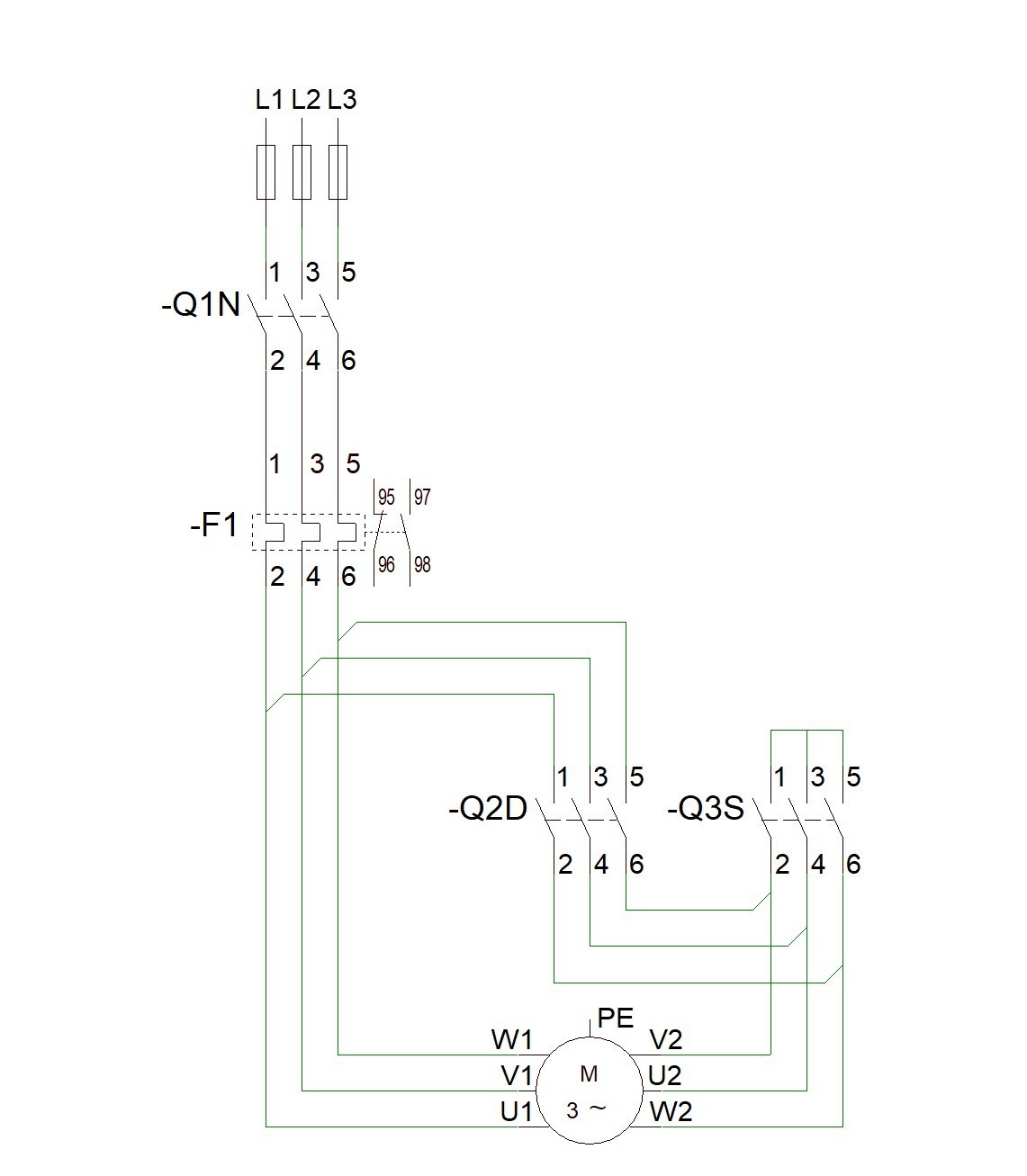
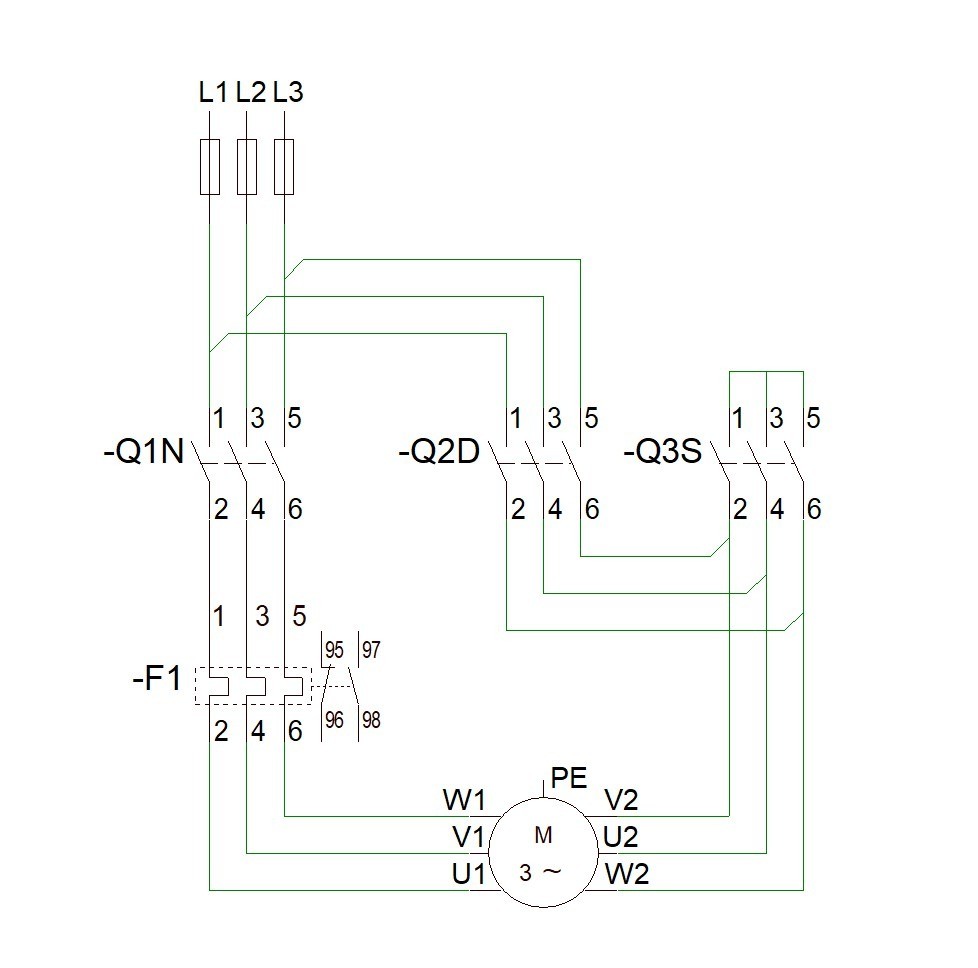
In a Star-Delta system, the current flowing through individual components is not always equal to the motor’s rated current (In). It all depends on where the thermal overload relay (thermal) is integrated into the circuit.

Scenario 1: Thermal relay installed before the starter (main supply)

If the protection is placed before the contactors, it “sees” the full current drawn from the network.

  • Setting: In this case, the setting current (Iset) must be equal to the motor’s nominal rated current from the nameplate (In)
  • Formula: Iset = In

Scenario 2: Thermal relay installed in the phase branch (most common practice)

In professional Tripus systems, the thermal relay is usually mounted under the main contactor or the delta contactor. In this configuration, the current phase flows through the protection rather than the current line.

  • Why is this important?: the phase current is lower than the line current by the square root of three (approx. 1.73).
  • Formula: Iset= 0,58 x In
  • Example: if your motor has a rated current of 10A, a thermal relay wired inside the delta loop should be set to 5.8A.

Tripus expert advice

Incorrectly setting the relay to the full 10A inside the delta configuration means the motor could draw nearly 70% more current than it should before the protection reacts at all!

What else should you consider?

  • Starting time: if your machine has a heavy start-up (e.g., a large fan or a mill), a standard Class 10 relay may trip too quickly. In such cases, consider protection with different trip characteristics.
  • Contact quality: Y-D systems involve switching under load. When choosing components, opt for solutions with high mechanical durability, such as those offered by Tripus.
  • Phase failure: a high-quality thermal relay should also protect the motor against single phasing (running on two phases), which is the most common cause of motor failure in agriculture and industry.

Summary

Selecting protection in a Star-Delta system leaves no room for error. Remember the 0.58 rule if you are mounting the relay inside the circuit. Following this principle ensures your machinery will operate reliably for years.

Looking for ready-made solutions?

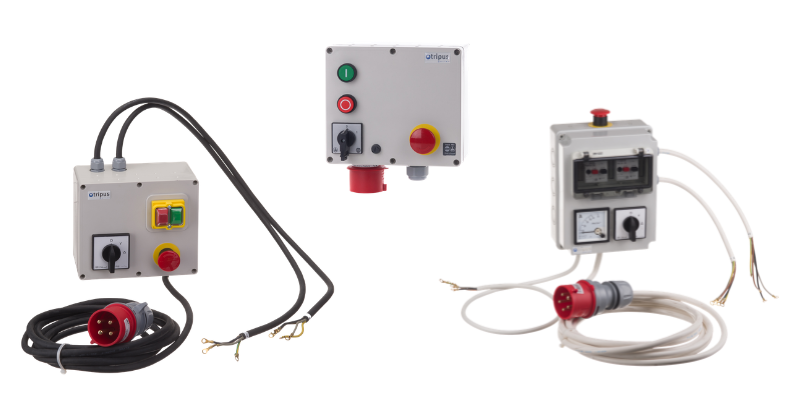
At Tripus, we offer fully assembled and tested Star-Delta control systems configured for specific motor power ratings. Don’t risk calculation errors – rely on our proven modules.

>>Browse the Tripus controller catalog<<

Contact form

In case any technical questions our Technical Department remain for Your disposal

Last posts on the blog

23.02.2026

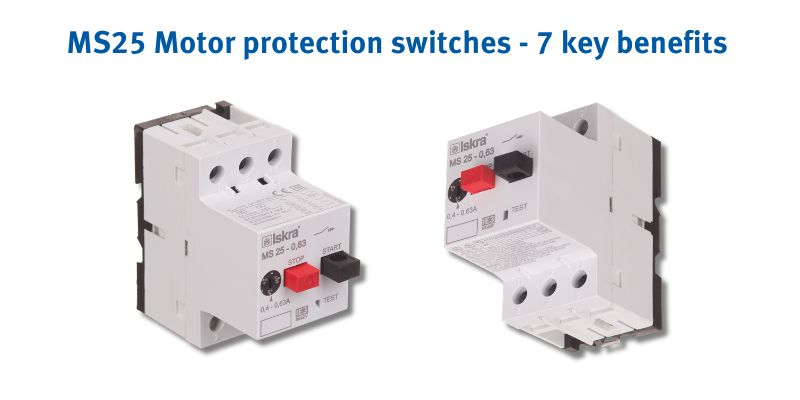
Why are MS25 Motor Protection Switches an Industrial Standard?

Recently on our LinkedIn profile, we focused extensively on the reliability and versatility of the MS25 series. Your interest in these posts has confirmed our belief that solid drive protection is a critical topic for every modern facility. Continuing this thread, we have prepared a detailed breakdown to help you understand why these devices are […]
21.01.2026

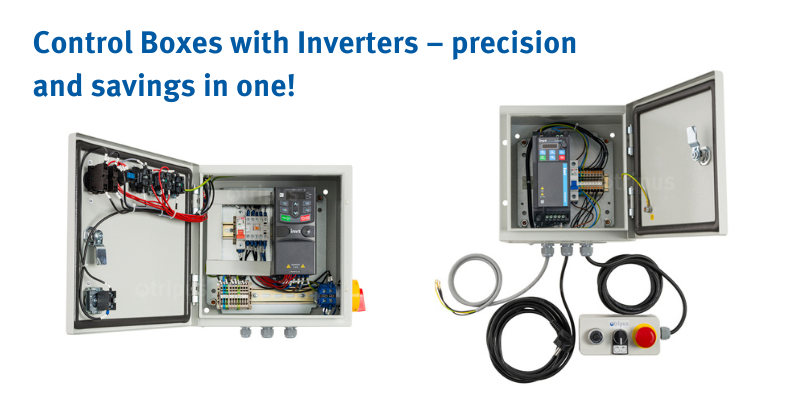
Control Boxes with Inverters – precision and savings in one

Some time ago on our blog, we discussed the theoretical foundations of speed control for induction motors. Today, we are taking another step forward. We are proud to announce the expansion of our offer to include ready-to-use control boxes equipped with advanced frequency inverters. In modern industry, “standard” control is often not enough. Our new […]

All posts

Zapytaj o produkt


    This will close in 0 seconds

    Ask about the system


      This will close in 0 seconds

      Fragen zum System


        This will close in 0 seconds

        Zapytaj o system


          This will close in 0 seconds

          Zapytaj o system


            This will close in 0 seconds